

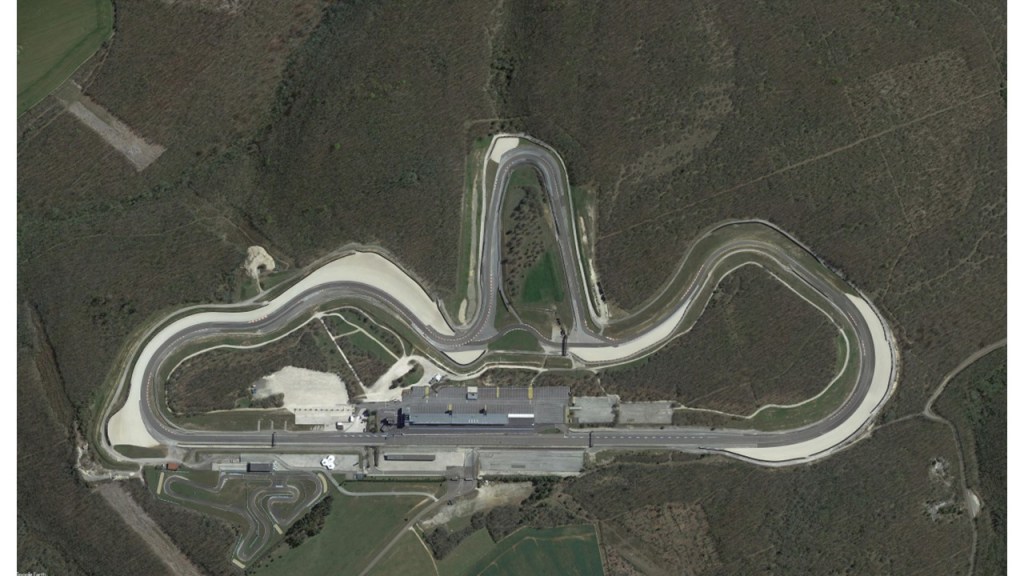
Layout: Actual
When was the track built?
The circuit came out of an idea of rugby-player and wrestler François Chambelland, who was keen to make Dijon a popular motorsport destination.
With support of some French drivers, despite struggles in obtaining adequate funding, the circuit opened in 1972 and hosted the first race two years later.
The original 3.2km layout was too short and was creating traffic issues so in 1976 was modified to the current one, which has also been the scene of the iconic Villeneuve-Arnoux duel.
After decades of more local racing, Formula will be back from 2023.
When was its first Grand Prix?
In 1974, with a victory for Ronnie Peterson’s Lotus-Ford, after overtaking Lauda and his Ferrari, who took pole position, in the early stages of the race.
It is one of the eight French circuits that will rotate for spots in the European and World Title series.
What’s the circuit like?
With lap times that will definitely be under the minute mark, this racetrack is completely different from the average modern F1 layout.
Almost no hard braking zone, drivers will rarely use the brake pedal.
Car balance and the ability to be close to the car in front will be crucial to win in Dijon.
Where is it located?
Few kilometers north-west of Dijon; the closest International airport is Lyon, a couple of hours south. (+ 47°21’46”, + 4°53’58”)
 All Along The Racetrack